
Bayer Wants Pesticide Immunity

by Mary Budinger
The vaccine industry was given an immunity shield by the U.S. government in the 1980s; now the pesticide industry wants essentially the same thing.
Agro-chemical multinational Bayer has been actively lobbying for legislation on both the state and federal level that would shield pesticide manufacturers from liability in lawsuits related to health risks. Nationally, the HR4288 Agriculture Labeling Uniformity Act would protect companies from claims they failed to warn consumers about the dangers of their pesticide products. Specifically, it would amend the Federal Insecticide, Fungicide, and Rodenticide Act with respect to the uniformity of pesticide labeling.
Bayer has paid billions in settlements since 2018 when it purchased Monsanto, the original manufacturer of Roundup. The legislative drive is part of Bayer’s strategy to manage roughly 180,000 legal claims alleging that weed killer Roundup’s key ingredient, glyphosate, causes cancer, particularly non-Hodgkin lymphoma. Bayer founded the Modern Ag Alliance – a coalition of nearly 100 agricultural organizations, to advocate for favorable legislation. The group argues glyphosate is essential for safe and affordable food and is the “backbone of modern agriculture.”
Critics say the legislation would set a precedent expanding immunity for polluting industries. According to attorney Daniel Hinkle, from the American Association for Justice:
“It locks in outdated science, even when new dangers are discovered. This bill would prohibit the EPA from updating pesticide labels or take ‘any regulatory action’ to reflect new health risks – even if the science is clear and the company asks for the change. No cancer warnings. No birth defect disclosures. No updates for Parkinson’s. Even when the science is clear, the label would stay frozen unless EPA restarts a full review, which can take years or decades.
“That means dangerous products could stay on the market with misleading labels — even if the company lied about the risks and covered up critical safety data. No one could be held accountable.”
Let the Sausage-Making Begin
The Washington-bill-passage process starts with getting desired language in an appropriations bill. Done. The Interior subcommittee of the House Appropriations Committee included Bayer’s language in its so-called mark-up of the bill July 15.
Now the bill sits in front of the full House Appropriations Committee. Their website indicated the committee met on July 22. The Appropriations Committee has 63 members. [Editor’s note: The House Appropriations Committee passed this bill on a verbal vote. No accounting of the yeas/nays is available.]
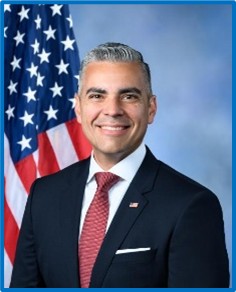
ACTION ITEM: There is one committee member from Arizona, Rep. Juan Ciscomani, representing the 6th Congressional District. His Washington office is (202) 225-2542; his Tucson office is (520) 881-3588; his Sierra Vista office is (520) 459-3115. For those out-of-district folks who want to use email, it is [email protected]
The next step is getting what passes out of Appropriations into another bill, likely the Farm Bill that is expected to be taken up in September. Then the full House would vote on that bill where the pesticide immunity issue will likely be one item in a much bigger bill. Then that bill has to pass out of the Senate, pass out of the reconciliation process, and onto the president’s desk where it can be signed into law or vetoed.
So far, two states – North Dakota and Georgia – have passed pesticide liability shield laws. The new law “demonstrates that Georgia stands with its farmers, who work tirelessly to produce safe and affordable food,” said Brian Naber, president of Bayer’s crop sciences in North America, Australia and New Zealand. “Without crop protection tools, America’s consumers could face higher costs to provide for their families and put food on the table.”
Meanwhile
An opposing bill was submitted in July by Senator Cory Booker of New Jersey. His bill, the ‘‘Pesticide Injury Accountability Act of 2025”, would turn the tables.
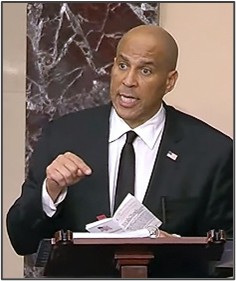
Booker’s proposed law would not invalidate the state laws, but would give individuals the right to bring their injury claims in federal courts if they can’t bring them in state courts.
“Rather than providing a liability shield so that foreign corporations are allowed to poison the American people, Congress should instead pass the Pesticide Injury Accountability Act to ensure that these chemical companies can be held accountable in federal court for the harm caused by their toxic products,” Senator Booker said.
The largest pesticide companies are not American owned. The summary of Booker’s bill names both Germany-based Bayer and the Chinese-owned Syngenta as key targets and says they and others are seeking “liability shields because they know the harm their products have already caused.”
So far, 17 environmental, public health, and consumer groups have endorsed the measure, including leaders in the “Make America Healthy Again” (MAHA) movement.
Bayer insists glyphosate is safe and that for decades, the product has provided a safe and efficient way to control weeds with less tilling, which helps prevent soil erosion. But Bayer has stopped using the ingredient in its residential version of Roundup and has set aside $16 billion to settle cases. It continues to use glyphosate in its agricultural version of Roundup.
Internal documents show Monsanto was aware of research linking Roundup to cancer decades ago. The company downplayed unfavorable assessments by its researchers, worked with EPA regulators to conceal agency studies, orchestrated campaigns to discredit independent scientists, and improperly influenced the peer review process with ghostwriting and other forms of research misconduct.
Mary Budinger is an Emmy award-winning journalist and a certified nutritional therapist practitioner (NTP). She lives in Phoenix, AZ, and writes about functional medicine and nutrition.
The views and opinions expressed in this article are those of the author(s) and do not necessarily reflect the views of Children’s Health Defense and/or Children’s Health Defense – Arizona. Information shared and presented is for educational purposes only; no material is intended to be a substitute for professional medical advice, diagnosis, treatment or any other professional advice.